Is LeetCode-Style Interviewing Still Worth It?
Why algorithmic interview questions still matter in the age of LLMs — and practical advice for engineers prepping for their next role.
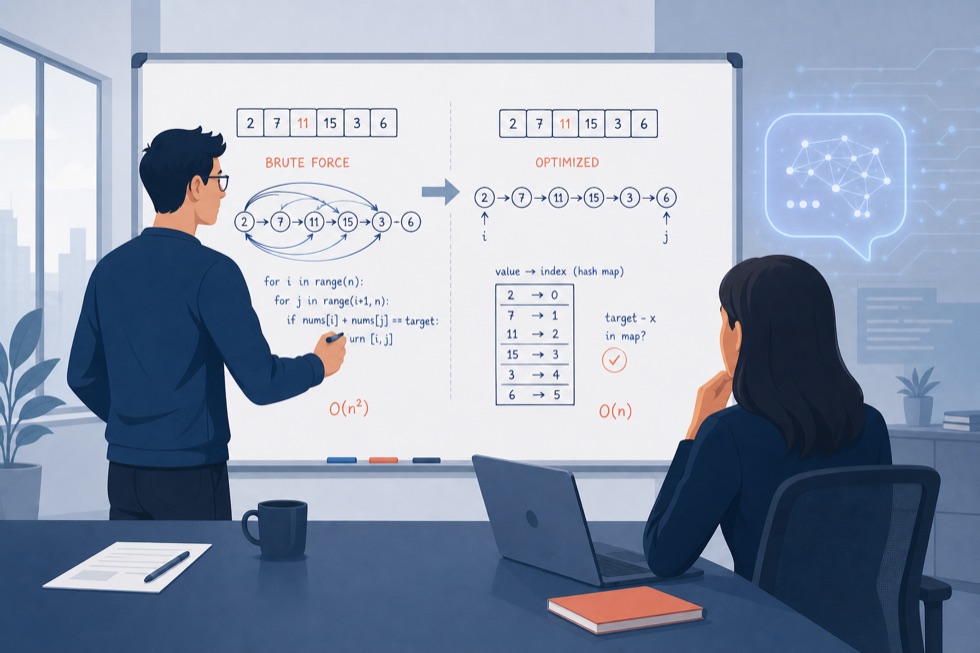
When I was actively conducting interviews, I often asked questions ranging from arrays, hashing, linked lists, trees, graphs, search. I never used this to evaluate how well someone could code, but to see if they could actually think through a solution in their mind.
Some candidates go completely silent and jump straight into coding. What we really want to hear is the initial brute-force approach they think of and how they reason through the problem. On the other hand, some candidates appear to have seen the question before and immediately present the optimal solution. Neither approach is particularly helpful for the interviewer. The goal is to understand the candidate's thought process, problem-solving ability, and how they arrive at a solution.
With the advent of LLMs now, I wonder if we still need LeetCode-style questions, or if we should move to design questions instead.
After thinking about this, my current thinking is that LeetCode is still very relevant, because we want engineers who can efficiently use tokens/prompts. If someone can't think through how to solve a problem to begin with, that results in a lot of wasted prompting, and the solution that comes out of the LLM won't efficiently solve the problem. Even if the engineer somehow manages to solve the immediate issue, they won't be able to articulate how that change might break something else.
But with AI, expectations from engineers — even at the beginner level — have evolved. We're now looking for people who can efficiently use LLMs while having a strong grounding in system design and design patterns. I'd recommend people interviewing to still keep their LeetCode skills sharp and practice at least easy and medium questions.
For engineers prepping for interviews: talk your thinking out loud. Your interviewer wants to understand how you think, because that's what they'll actually be working with, and it tells them about your critical thinking skills. And don't worry — there will be times you choke even on questions you know are easy. It happens to the best of us, myself included, on multiple occasions. But doing a retro afterward helps you develop and do better the next time.
I found NeetCode's Blind 75 to be a great resource.